George Washington's Faith: A Christian Foundation for the American Republic

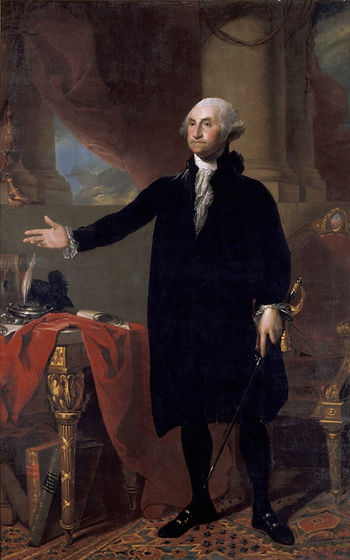
George Washington, the first President of the United States (1789-1797), remains one of the most revered figures in American history. His leadership in shaping the early American Republic was guided by an unwavering belief in divine providence and the necessity of religion and morality in sustaining the new nation. Washington viewed Christianity as integral to the survival and prosperity of the United States, frequently expressing his belief that the success of the Republic was inseparably tied to faith in God.
Washington’s View on Religion and Providence
Throughout his presidency, Washington often invoked divine providence, attributing the birth and preservation of the United States to the guiding hand of God. In his Farewell Address, which was first published in September 1796 in the Philadelphia Daily American Advertiser, Washington explicitly reinforced the importance of religion and morality in public life, stating:
"Of all the dispositions and habits which lead to political prosperity, Religion and morality are indispensable supports. In vain would that man claim the tribute of Patriotism, who should labour to subvert these great Pillars of human happiness, these firmest props of the duties of Men & citizens."1
Washington was unequivocal in his assertion that the nation’s moral foundation rested upon religious principles. He warned against the dangers of abandoning these values, emphasizing that morality could not be sustained without religion.
"Let us with caution indulge the supposition, that morality can be maintained without religion. Whatever may be conceded to the influence of refined education on minds of peculiar structure—reason & experience both forbid us to expect that National morality can prevail in exclusion of religious principle."2
Here, Washington made it clear that the very fabric of American society was dependent on religious faith, reinforcing the argument that the United States was not only built on Christian values but required them for its continued success.
Providence in Washington’s Presidency
Washington frequently spoke of divine providence in both his public and private correspondence. In his Farewell Address, he expressed his gratitude for the role that divine intervention played in shaping the nation's destiny:
"Profoundly penetrated with this idea, I shall carry it with me to my grave, as a strong incitement to unceasing vows that Heaven may continue to you the choicest tokens of its beneficence."3
This statement underscores Washington’s belief that the success and future of the American Republic rested in God's hands. He saw the hand of divine providence guiding the nation and urged the American people to remain faithful to God to ensure continued blessings and stability.
A Call for National Unity Rooted in Faith
Washington also linked religious belief to national unity, warning against divisive forces that could threaten the young Republic. He reminded Americans of their shared heritage and faith:
"With slight shades of difference, you have the same Religion, Manners, Habits & political Principles. You have in a common cause fought and triumphed together—the independence & Liberty you possess are the work of joint councils, and joint efforts—of common dangers, sufferings and successes."4
By highlighting the common religious and moral foundation of the American people, Washington reinforced the notion that national unity could not be separated from a shared faith in God. He saw religious devotion as a unifying force, necessary to prevent factionalism and maintain a stable government.

Washington’s Faith as a Model for Future Leaders
Washington’s belief in Christianity and its role in governance set a precedent for future leaders of the United States. His Farewell Address, often regarded as one of the most important documents in American political history, provides an enduring testament to his conviction that the Republic’s survival depended on adherence to Christian values.
His warning remains relevant today:
"Can it be, that Providence has not connected the permanent felicity of a Nation with its virtue? The experiment, at least, is recommended by every sentiment which ennobles human Nature."5
Washington firmly believed that the fate of the nation was tied to its virtue and adherence to faith. His words serve as a timeless reminder of the importance of Christian values in guiding both individual character and national policy.
Addressing Counterpoints in the Farewell Address
Some historians argue that Washington’s Farewell Address does not explicitly endorse Christianity but rather refers to religion in a more general sense. His emphasis on religious morality, rather than a particular faith, has been interpreted as an argument for religious pluralism rather than an outright declaration of the United States as a Christian nation.
However, Washington’s Thanksgiving Proclamation of 1789 provides a strong counterpoint to this argument. In this proclamation, Washington directly acknowledges Almighty God and calls upon the American people to express gratitude and seek divine guidance:
"Whereas it is the duty of all Nations to acknowledge the providence of Almighty God, to obey his will, to be grateful for his benefits, and humbly to implore his protection and favor..."6
Washington further encourages the nation to unite in prayer and thanksgiving:
"Now therefore I do recommend and assign Thursday the 26th day of November next to be devoted by the People of these States to the service of that great and glorious Being, who is the beneficent Author of all the good that was, that is, or that will be."7
This proclamation reaffirms Washington’s personal faith and his belief in the necessity of national recognition of divine providence. His consistent references to “Almighty God” and the duty of the nation to acknowledge divine guidance strongly suggest that his vision for religion in public life was rooted in Christianity rather than a generic spiritual framework. Furthermore, the use of “Almighty God” in 18th-century language was a common way Christians referred to the Christian God, reinforcing that Washington’s religious references were grounded in Christian tradition rather than a broader religious pluralism.8
Conclusion
George Washington’s presidency was deeply influenced by his Christian faith and his belief in divine providence. His Farewell Address provides clear evidence that he saw religion and morality as essential pillars for the success and stability of the United States. While some interpretations suggest he was advocating for religion broadly rather than Christianity specifically, his Thanksgiving Proclamation offers a compelling argument that Washington believed in calling upon Almighty God for the nation’s guidance and prosperity.
Washington’s vision for the nation was not only political but also spiritual—an enduring call for Americans to uphold faith, morality, and unity as the foundation of the Republic. As this blog series continues, we will explore how Christianity has influenced all the presidents throughout American history, further demonstrating the foundational role faith has played in shaping the United States.
References
George Washington, President Washington's Resignation and Address to the Citizens of the United States, September 17, 1796: An Invaluable Legacy to Americans, Newburyport: Printed by William Barrett, 1796, Sabin Americana: History of the Americas, 1500-1926. (12)
Ibid. (13)
Ibid. (5)
Ibid. (6)
Ibid. (14)
Franklin Hough and United States Continental Congress, Proclamations for Thanksgiving, Albany: Munsell & Rowland, 1858, Sabin Americana: History of the Americas, 1500-1926. (30)
Ibid. (31)
Peter Lillback, George Washington’s Sacred Fire, Providence Forum Press, 2006. (578)
Bibliography
Hough, Franklin Benjamin, and United States Continental Congress. Proclamations for Thanksgiving. Albany: Munsell & Rowland, 1858. Sabin Americana: History of the Americas, 1500-1926.
Lillback, Peter A. George Washington's Sacred Fire. Providence Forum Press, 2006.
Washington, George. President Washington's Resignation and Address to the Citizens of the United States, September 17, 1796: An Invaluable Legacy to Americans. Newburyport: Printed by William Barrett, 1796. Sabin Americana: History of the Americas, 1500-1926.
Stuart, Gilbert. George Washington. Oil Portrait, 1797. White House Collections/Historical Association.
Comments