Armour’s Elevator and the Grain Boom: Seneca and Its Neighbors in Postbellum Illinois

Updated: May 8
Grain built LaSalle County and the American Midwest. After the Civil War, the fields near the Illinois and Michigan Canal didn’t just grow corn, wheat, and other crops; they grew small towns into busy waypoints on the road to Chicago. But here’s the thing: getting that grain to market wasn’t easy. As the Illinois Department of Conservation put it, “prior to the development of grain elevators and the canal, area farmers had to load and transport their own grain to market by horse and wagon.”1 Imagine the time, the sweat, the jolting ride of a wagon full of corn just to reach a buyer or a market.
Then came the grain elevator—first pioneered in Buffalo, New York, in 1842 as a steam-powered system for lifting grain. The idea spread quickly westward. By the 1860s, towns along the Illinois and Michigan Canal were adopting the technology, and with it, farm communities were transformed. Farmers could haul their crop a few miles into town, unload it in minutes, and let the elevator do the hard part of storing, protecting, and eventually transferring grain into canal boats or railcars. That step turned grain from a local product into a commercial one. And it’s no exaggeration to say that elevators reshaped the very identity of towns along the canal.2
This story focuses on four of those towns: Seneca, Marseilles, Ottawa, and LaSalle/Peru. They make for a fair comparison. Each one sat on the Chicago and Rock Island Railroad and the I&M Canal, shared the same soil and climate, grew roughly the same crops, and paid the same county and state taxes. In other words, the playing field was level. What differed was how their grain elevators tied them into the wider trade and how much prosperity that connection created.

Seneca is the centerpiece here, and at the heart of Seneca stood the Armour’s Warehouse Grain Elevator. Built in 1861 by John, it’s now on the National Register of Historic Places and still stands as the oldest standing grain elevator in the United States. Its story is more than architectural survival; it captures how one small-town elevator could punch far above its weight. By the 1880s, the Hogan family operated it, and when a rail spur reached its doors in 1882, Seneca suddenly had the kind of shipping options most towns envied. Canal on one side, rail on the other.
The years 1870 to 1890 are the ones to watch. This was when the elevators ran at full capacity, when Seneca’s population and commerce swelled, and when new buildings and new businesses sprang up around the grain trade. The question is straightforward but important: Did Seneca’s elevators, especially Armour’s Warehouse, do more to improve local life than those in Ottawa, Marseilles, or LaSalle/Peru?
And while this is a story rooted in a single county along a single canal, it’s worth remembering it’s just one piece of a bigger picture. Grain elevators like these sprang up across the Midwest and beyond, each one helping farmers get their crops to market. LaSalle County’s experience is only a microcosm, but it reveals on a small scale how much these wooden structures mattered in shaping economic growth after the Civil War.
Talking about “economic progress” can feel slippery. Is it just more money? Bigger buildings? A fancier main street? Those things matter, sure, but they don’t tell the whole story. As Randall Holcombe once pointed out, true growth isn’t just about more—it’s about improvement in people’s lives.3 That’s the lens to use when looking at towns like Seneca, Ottawa, Marseilles, and LaSalle/Peru. They didn’t just want more bushels of corn; they wanted stronger communities, better opportunities, and reasons for families to stay put.
So how do we know if the elevators actually delivered that kind of improvement? For this story, seven signs of growth help us find the answer.
The first is population growth. People don’t move somewhere unless there’s a reason—jobs, opportunity, or maybe just a sense that things are happening. The second is infrastructure investment. When a railroad company lays a new spur or the town builds a bridge to handle farm wagons, that’s a clear vote of confidence in the local economy.
The third sign is business multiplication. Grain trade doesn’t exist in a bubble; it brings banks, blacksmiths, lumber yards, and general stores along with it. Fourth comes industrial and commercial expansion—those moments when demand grows so fast that new warehouses, elevators, or factories pop up to keep pace.
The fifth sign is a little different: output relative to scale. A big city shipping millions of bushels is impressive, but when a town of barely a thousand people ships close to a million bushels, that says something special about its role in the region. Sixth is market integration—the degree to which farmers can connect to bigger markets through canals, rivers, or railroads, and actually get fair prices for their crops.
And finally, there’s sustainability. A one-time boom is exciting, but real growth lasts long enough to change daily life. Did prosperity hold steady through the 1870s and 1880s, or was it gone in a flash? That’s the kind of question that separates temporary fortune from genuine improvement.
When you hold Seneca up against Ottawa, Marseilles, and LaSalle/Peru using the seven standards, it’s striking how much a village of barely a thousand people could achieve. Armour’s Warehouse, later passing through the hands of James Armour, Nelson Rulison, Guy Griswold, and finally Martin Hogan, wasn’t the largest elevator in LaSalle County or in Seneca at the time, but its impact on Seneca was undeniable. With a capacity of 100,000 bushels, and backed by the canal and later the Kankakee & Seneca Railroad spur, Armour’s Warehouse transformed Seneca into a grain hub whose activity rivaled much larger towns.4
Population growth is the most visible marker. Between 1880 and 1890, Seneca’s population jumped 61%, from 738 to 1,190. Ottawa grew just 27% in that decade, and Peru 20%, while Marseilles barely added 17% after its earlier boom. Seneca’s surge coincided directly with the peak years of elevator activity.5
Infrastructure investment played a major role. By the 1850s, all four towns already enjoyed the advantages of the Illinois & Michigan Canal and the Rock Island Railroad, which ran side by side toward Chicago. Ottawa and LaSalle/Peru, in particular, had long been favored as inland markets because of their connectivity. What set Seneca apart was the 1882 Kankakee & Seneca Railroad spur. Built south from Kankakee across the Illinois River and then turning west to parallel the Rock Island line, the spur bent back south and ended directly at Armour’s Elevator. This direct line was essentially a tailor-made delivery system, ensuring that Seneca’s grain could move in bulk more efficiently than before.6
Business multiplication followed. Grain may have been the backbone, but it was the supporting businesses that gave Seneca its surprising energy. Nelson Rulison, one of the elevator’s owners, established a bank in Seneca that operated until 1892, helping to finance both farm trade and town growth.7 By the late 1870s, accounts describe Seneca as bustling with two warehouses, stores, and service shops—a remarkable density for a town of its size.8 Even coal mining began locally, spurred by the sheer amount of freight flowing through the village by canal and rail.
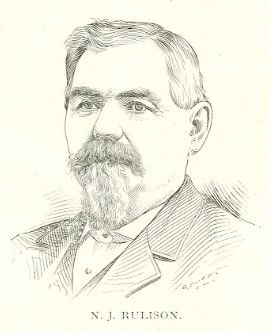
The numbers themselves tell the story of industrial and commercial expansion. Grain receipts at Rulison’s warehouse during a portion of the harvest in 1882 set a record: 152,580 bushels of corn and 17,010 bushels of oats—169,490 bushels total—in just twenty-three days.9 In the 1870s, Seneca shipped as much as 800,000 bushels of grain in a single year, plus 225 cars of livestock. By contrast, Marseilles averaged around 400,000 bushels annually, and while Ottawa dwarfed everyone with totals over 1.3 million bushels, Ottawa’s size makes Seneca’s figures remarkable. For a village of roughly 1,000 people, to match half of Ottawa’s grain receipts was nothing short of extraordinary.10
That leads naturally to output relative to scale. Ottawa shipped more in raw numbers, but with nearly 10,000 people, its output per capita was far lower than Seneca’s. Marseilles and Peru also shipped substantial volumes, but neither matched Seneca’s combination of grain and livestock traffic. For every man, woman, and child in Seneca, the elevators were moving close to a thousand bushels of grain each year.
Market integration was strong across the county, since every town had canal and Rock Island rail connections from the mid-19th century onward. But Seneca’s combination of the I&M Canal, the Rock Island Railroad, and the dedicated Kankakee & Seneca spur gave farmers unusual leverage. They weren’t locked into one route. With more than one option for rail, grain shipping could choose from a few different options and compete for prices. Ottawa was still the best inland market overall, but Seneca’s flexibility was unusual for a town its size.11
Finally, sustainability. The fact that Martin Hogan consolidated ownership of both the Armour (north canal bank) and Underhill (south canal bank) elevators by 1886 speaks to the enduring importance of the trade. Even after 1890, Hogan’s name remained synonymous with Seneca’s grain business, proof that this was no short-lived boom. The elevators kept the town economically relevant well into the 20th century.12

So while Ottawa, Marseilles, and Peru had size, diversification, and infrastructure, Seneca’s story was different. Between 1870 and 1890, this small canal village of barely a thousand people used its elevators—Armour’s Warehouse chief among them—to drive population increases, new businesses, and infrastructure investments that rivaled towns several times its size. Ottawa may have moved more grain in raw numbers, and Peru and Marseilles may have leaned more heavily into industry, but Seneca’s prosperity was sharper, more concentrated, and more tightly tied to its elevators. By every one of the seven standards—population, infrastructure, business growth, expansion, output relative to scale, market integration, and sustainability—Seneca’s elevators, especially Armour’s Warehouse, punched far above their weight.
It also mattered that Seneca sat in one of the strongest farming counties in the nation. Illinois in 1880 had more farms than any other state—255,741—and nearly 32 million acres under cultivation, second only to Texas. LaSalle County ranked near the very top in Illinois, with 4,982 farms and 681,125 acres in farmland. In the same census, the county reported over $5.2 million in total farm production value, only $40,000 short of McLean County, the state leader. These numbers remind us that Seneca’s elevators didn’t exist in isolation. They were part of a county where agriculture itself was the engine of prosperity, and where improvements in grain storage and shipping had an outsized effect on the local economy.13
The story of Seneca didn’t end with the nineteenth century. After the peak decades of elevator activity, population growth slowed and even declined going into the next century. Through the early twentieth century, Seneca remained a small farm town. Its elevators still served local agriculture, but the explosive growth of the 1870s and 1880s gave way to a steadier rhythm. By the years leading up to the Second World War, Seneca had not grown into a major city like Ottawa. It remained modest in size and seemingly limited in scope.
But its capacity to mobilize resources never disappeared. The same traits that once made it a grain hub—the ability to organize labor, attract investment, and move goods efficiently—were still there, waiting to be called on. In the 1940s, those qualities resurfaced in a way no one might have predicted: Seneca built warships. During World War II, the Chicago Bridge & Iron Company constructed a shipyard in the village that produced Landing Ship, Tanks (LSTs)—the very vessels that carried men and machines onto the beaches of Europe and the Pacific. What had once been a grain hub became, almost overnight, an industrial site of national importance.
That leap—from elevators to shipyards—shows why Seneca matters as more than a local story. The grain era demonstrated that even a small farm community could mobilize resources, coordinate labor, and plug into larger markets. The wartime shipyard built on that foundation, revealing a continuity between Seneca’s nineteenth-century grain economy and its twentieth-century role in the global conflict.
This kind of story also points toward future research. Agricultural advancement has often been the first step in broader economic growth. The census data makes clear that LaSalle County’s prosperity rested first on its farmland. Tracking how that agricultural base laid the groundwork for later industrial leaps—whether in grain shipping or wartime shipbuilding—offers a rich avenue for further study.
Footnotes
Illinois Department of Conservation National Park Service, Seneca Grain Elevator, U.S. Government Printing Service, 1988.
Tom Willcockson, Passage to Chicago: A Journey on the Illinois & Michigan Canal in the Year 1860, Canal Corridor Association, 2016. (40)
Randall G. Holcombe, “Progress and Entrepreneurship,” The Quarterly Journal of Austrian Economics Vol. 6, no. 3 (Fall of 2003). (8)
Gray Fitzsimons, An Inventory of Historic Engineering and Industrial Structures Within the Illinois & Michigan Canal National Heritage Corridor, National Park Service U.S. Department of the Interior, 1995. (135) & Seneca Historical Guild, “Grain Barons, ” Seneca Area Heritage Museum, 2020.
1880 Census Volume 1: Statistics of the Population, United States Census Bureau, 1880.
H.F. Kett, Past and Present LaSalle County Illinois 1877, H.F. Kett and Co.: Chicago, 1877. (331-332)
Ibid. (332)
Ibid. (332)
“Seneca Record,” The Ottawa Freetrader, September 30th, 1882, Seneca Historical Guild Archives.
Elmer Baldwin, History of LaSalle County Illinois, Rand McNally and Co, 1877. (544)
Seneca Historical Guild, “Grain Barons, ” Seneca Area Heritage Museum, 2020.
Ibid.
1880 Census Volume 3: Reports on the Production of Agriculture, United States Census Bureau. (4 and 112)
Bibliography
1880 Census Volume 1: Statistics of the Population. United States Census Bureau, 1880.
1880 Census Volume 3: Reports on the Production of Agriculture. United States Census Bureau. 1880.
Baldwin, Elmer. History of LaSalle County Illinois. Rand McNally and Co. 1877.
Fitzsimons, Gray. An Inventory of Historic Engineering and Industrial Structures Within the Illinois & Michigan Canal National Heritage Corridor. National Park Service U.S. Department of the Interior. 1995.
Holcombe, Randall G. "Progress and Entrepreneurship." The Quarterly Journal of Austrian Economics Vol. 6, no. 3 (Fall of 2003): 3-26. https://mises.org/quarterly-journal-austrian-economics/progress-and-entrepreneurship.
Illinois Department of Conservation National Park Service. Seneca Grain Elevator. U.S. Government Printing Service, 1988.
Kett, H.F. Past and Present LaSalle County Illinois 1877. H.F. Kett and Co.: Chicago. 1877.
Photo of the Armour/Hogan Grain Elevator, 1912. Seneca Area Heritage Museum and Research Center.
Photo of Farmers outside of the office of the Armour/Hogan Grain Elevator, 1896. Seneca Area Heritage Museum and Research Center.
Image of Nelson J. Rulison. Seneca Area Heritage Museum and Research Center.
Seneca Historical Guild, “Grain Barons, ” Seneca Area Heritage Museum, 2020.
“Seneca Record.” The Ottawa Freetrader. September 30th, 1882. Seneca Historical Guild Archives.
Willcockson, Tom. Passage to Chicago: A Journey on the Illinois & Michigan Canal in the Year 1860. Canal Corridor Association, 2016.

Comments